

Explore Topics
Learn How Different Markets Work
Plain-language guides to the major asset classes: what they are, how they make or lose money, and what to understand before you put a single naira, dollar or pound into them.

AGRICULTURE & COMMODITIES
How crops like cocoa, maize and rice are priced, why weather, seasons and harvest cycles move prices, and the different ways people gain exposure, from farmland and cooperatives to commodity futures.

STOCKS & EQUITIES
What owning a share really means, how stock exchanges work, the difference between growth and dividend stocks, and how to read the basic numbers in a company's financial statements.

REAL ESTATE
Rental income vs capital appreciation, the true costs of owning property (maintenance, taxes, vacancies), land titles and documentation, and how REITs let people own a slice of property without buying a building.

GOLD & PRECIOUS METALS
Why gold is often called a "safe haven", how it behaves during inflation and currency swings, and the trade-offs between physical bullion, gold funds and mining company shares.

CRYPTO & DIGITAL ASSETS
How blockchains and wallets work, what drives crypto's extreme volatility, the difference between custodial and self-custody, and the common scams every newcomer should recognise.

BONDS & FIXED INCOME
Treasury bills, government and corporate bonds explained: how interest (coupon) payments work, why bond prices fall when rates rise, and where fixed income fits in a balanced plan.
FEATURED ARTICLES
This Week on the meridovex Blog
AGRICULTURE · 7 min read
From Farm Gate to Market: How Food Prices Are Really Set
A walk through the supply chain, from input costs and storage losses to transport and middlemen, and why the price a farmer receives is often a fraction of what shoppers pay.
STOCKS · 6 min read
Stocks 101: What You Actually Own When You Buy a Share
Shares, market capitalisation, dividends and voting rights explained without jargon, plus why a share price can fall even when a company is still profitable.
REAL ESTATE · 8 min read
Renting, Buying or REITs: Comparing Your Property Options
A side-by-side look at upfront costs, ongoing expenses, liquidity and risk, so you can see which route fits your situation and timeline.
NEW HERE? START HERE
A Simple Learning Path for Beginners
Financial knowledge builds on itself. Follow these four steps in order and every other article on the blog will make more sense.

1. Get Your Money Basics Right
Budgeting, clearing high-interest debt and building an emergency fund come before any investing. These are the foundation everything else stands on.
2. Understand Risk and Return
Higher potential returns always come with higher risk. Learn what volatility, time horizon and risk tolerance mean for you personally.
3. Explore the Asset Classes
Work through our guides on stocks, bonds, real estate, agriculture, gold and crypto to see how each one behaves and where it can fit.
4. Build a Plan That Fits Your Goals
Turn what you've learned into a written plan: your goals, timeline, how much you can afford to set aside, and how you'll review it over time.
PERSONAL FINANCE
The Six Pillars of Healthy Finances
Investing is only one part of the picture. These everyday habits decide whether your money works for you or against you.
Budgeting
Know exactly where your income goes each month. A simple split between needs, wants and savings makes overspending visible before it becomes a problem.
Emergency Savings
A cash buffer of three to six months of essential expenses protects you from job loss, medical bills and repairs without forcing you into debt.
Managing Debt
Not all debt is equal. Learn to tell productive borrowing from costly consumer loans, and why clearing high-interest debt often beats any investment return.
Insurance
Health, life and property cover transfer big, unpredictable risks away from you. Understand premiums, deductibles and what a policy actually excludes.
Retirement Planning
Pensions and long-term savings work best when started early. Small, regular contributions in your twenties can outgrow large ones started in your forties.
Understanding Taxes
How income, capital gains and withholding taxes affect your real returns, and why keeping proper records of your earnings and investments saves trouble later.
FINANCE GLOSSARY
Key Concepts Every Investor Should Know
Compound Interest
Earning returns on your previous returns. Over long periods, time in the market matters far more than the size of your starting amount.
Diversification
Spreading money across different assets, sectors and regions so that one bad outcome doesn't wipe out everything.
Inflation
The gradual rise in prices that reduces what your money can buy. A return below the inflation rate means you're actually losing value.
Liquidity
How quickly you can turn an asset into cash without losing value. Savings are highly liquid; land and buildings usually are not.
Dividends & Yield
Cash a company or fund pays out to its owners. Yield expresses that income as a percentage of the price you paid.
Volatility
How sharply an asset's price swings up and down. Crypto and small-company stocks are highly volatile; treasury bills are not.
SIDE BY SIDE
How the Major Asset Classes Compare
A general overview of how each asset class tends to behave. Individual investments within each class can differ widely.
TRY IT YOURSELF
See Compound Growth in Action
Enter a starting amount, a monthly contribution, an annual rate and a number of years to see how money can grow when returns are reinvested.
This is an illustration with a fixed rate. Real returns vary year to year and can be negative.
You put in
0
Growth earned
0
Final balance
0

Protect Yourself: Red Flags of Investment Scams
If it sounds too good to be true, it almost always is.
Guaranteed or fixed high returns. Real investments carry risk, and nobody can promise you'll double your money in weeks.
Pressure to recruit others. Schemes that pay you mainly for bringing in new people are often Ponzi or pyramid structures.
Urgency and secrecy. "Act now" deadlines, unregistered operators and difficulty withdrawing your own money are serious warning signs.
Always check whether a company is registered with your country's securities regulator before sending money.
MYTHS VS FACTS
Common Money Myths, Debunked
MYTH
"You need a lot of money to start investing."
FACT
Many funds, treasury bills and fractional shares accept small amounts. Starting early with little often beats starting late with a lot.
MYTH
"Property and land always go up in value."
FACT
Location, title disputes, maintenance costs and economic downturns can all reduce property value. Real estate carries real risk.
MYTH
"Keeping cash at home is the safest option."
FACT
Cash is exposed to theft and fire, and inflation steadily erodes what it can buy. Safety also means protecting purchasing power.
MYTH
"Past returns tell you what will happen next."
FACT
Last year's top performer is often not next year's. Choose based on your goals and risk tolerance, not on recent headlines.
GLOBAL PERSPECTIVE
Understanding Markets Around the World
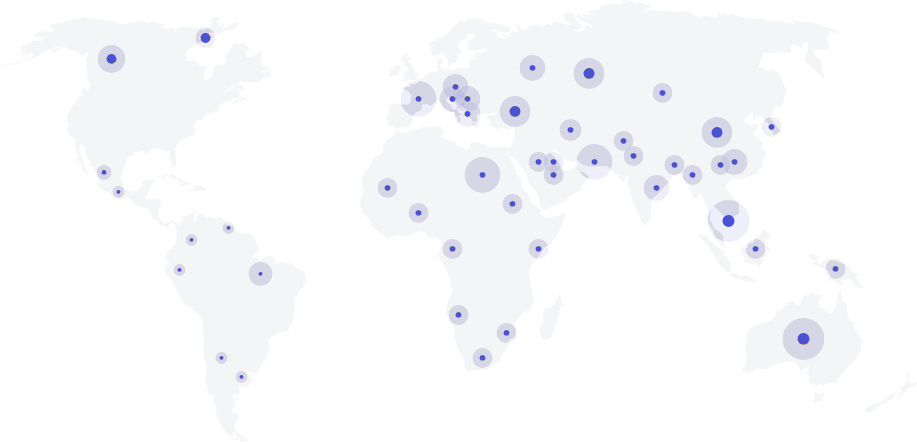
Interest-rate decisions in one country, oil prices, harvests and currency moves all ripple across borders. Our market explainers connect global events to what they mean for everyday savers, with special attention to emerging markets in Africa, Asia and Latin America.
THE BIGGER PICTURE
How Economic News Affects Your Pocket
Interest Rate Changes
When central banks raise rates, loans get more expensive, savings and T-bills pay more, and stock and bond prices often fall.
Rising Inflation
Prices climb and cash loses value. Assets like real estate, gold and some stocks have historically helped people keep pace.
Currency Movements
A weaker local currency makes imports, fuel and foreign education costlier, while boosting the local value of foreign-currency earnings.
Commodity Prices
Swings in oil, cocoa or grain prices ripple through transport, food costs and the earnings of countries and companies that produce them.
MONEY AT EVERY STAGE
Priorities Change as Life Changes
Students & Starters
Build the habit of budgeting, avoid easy consumer debt, and start a small savings routine, even if it's only a little each month.
Young Professionals
Grow your emergency fund, contribute to a pension, and use your long time horizon to learn about growth assets like stocks.
Growing Families
Plan for school fees and housing, review insurance cover, and balance long-term goals against near-term family needs.
Nearing Retirement
Shift focus toward protecting what you've built, steady income sources, healthcare costs and a clear plan for drawing down savings.
ASK MERIDOVEX
Questions From Our Readers
Join readers learning about money. Every week we answer real questions sent in by the community.
READER RESOURCES
Frequently Asked Questions
GETTING STARTED
Before you invest, it helps to have a solid foundation in place. A sensible order looks like this:
1. Get your basics in order. Have a budget, clear any high-interest debt and build an emergency fund that covers a few months of essential expenses.
2. Define your goal and timeline. Money you need in one year should be handled very differently from money for retirement in twenty years.
3. Understand your risk tolerance. Ask yourself honestly how you would feel, and what you would do, if your investment dropped 20% in a month.
4. Choose a regulated provider. Use banks, brokers, fund managers or pension administrators that are licensed by your country's financial regulator.
5. Start small, diversify and review. Begin with an amount you are comfortable with, spread it across different assets, and check your plan at least once a year.
Saving means putting money somewhere safe and easy to access, such as a savings account. Its value is stable, but the interest is usually low and may not keep up with inflation.
Investing means buying assets such as stocks, bonds, property or commodities that have the potential to grow in value or pay income over time. In exchange for that potential, you accept that the value can go down as well as up.
Most people need both: savings for short-term needs and emergencies, and investments for long-term goals.
Less than many people think. Mutual funds, treasury bills, pension contributions and fractional shares often accept small amounts.
What matters more than the starting sum is consistency. Investing a modest amount every month for many years can grow more than a large one-off amount invested late, because of compounding.
HOW INVESTMENTS REALLY WORK
Investments generally earn money in one or more of these ways:
Interest: you lend money, for example through bonds or treasury bills, and the borrower pays you interest.
Dividends: a company shares part of its profits with its shareholders.
Rent and produce: property earns rent, and farmland or agricultural ventures earn from selling harvests.
Capital gains: you sell an asset for more than you paid for it.
Every one of these depends on something real happening: a business making profits, a tenant paying rent, a crop being sold. If someone cannot clearly explain where the returns come from, treat that as a warning sign.
There is no guaranteed return on any genuine investment. Returns depend on the asset, the economy, interest rates, inflation and how long you stay invested, and they vary from year to year. Some years are negative.
Always compare returns against inflation. A 15% return in a year when prices rose 20% means your money actually lost purchasing power.
Be very cautious of anyone promising fixed, high returns such as weekly or monthly percentages. This is one of the most common features of investment scams.
Generally, the higher the potential return, the higher the risk of losing money. Treasury bills pay less than stocks because they are far less likely to lose value. Crypto can rise sharply, but it can also fall by more than half in a short time.
The right level of risk depends on your goals, how soon you need the money, and how comfortable you are watching your balance go up and down.
Diversification means not putting all your eggs in one basket. By spreading money across different assets (for example stocks, bonds, property and gold), sectors and countries, a loss in one area is less likely to badly damage your overall finances.
Diversification does not eliminate risk, but it reduces the impact of any single bad outcome.
It depends on the asset and your goal. Growth assets like stocks and property are usually best suited to periods of five years or more, which gives time to recover from downturns. Money you need within a year or two is generally better kept in lower-risk options like savings or treasury bills.
ASSET CLASSES
A stock (or share) is a small piece of ownership in a company. If the company grows and becomes more profitable, its share price may rise, and it may pay dividends. If it struggles, the price can fall.
Stocks are bought and sold on exchanges through licensed brokers. Many beginners start with index funds or mutual funds, which hold many companies at once for built-in diversification.
People gain exposure to agriculture by owning or leasing farmland, joining cooperatives, investing in agribusiness companies, or through commodity markets for crops like cocoa, maize and wheat.
Returns depend on harvest yields, weather, pests, storage, transport and market prices, so agriculture carries real risk. Be wary of farm "sponsorship" schemes that promise fixed returns regardless of how the harvest goes. A genuine farm cannot guarantee the weather.
Real estate can provide rental income and long-term growth, but it needs a large amount of capital, is hard to sell quickly, and comes with ongoing costs such as maintenance, taxes, agent fees and periods without tenants.
Always verify land titles and documentation before buying. Real Estate Investment Trusts (REITs) let you own a share of property portfolios with smaller amounts and easier selling.
Gold has historically held its value during crises, inflation and currency weakness, which is why many people hold a small portion of their savings in it. However, gold pays no interest or dividends, so its return comes only from price changes, and the price can stay flat for years.
You can hold physical gold, gold funds, or shares in mining companies, and each comes with different costs and risks.
Both are loans. When you buy a bond or treasury bill, you lend money to a government or company, which pays you interest and returns your money at the end of a set period.
Treasury bills are short-term (usually under a year), while bonds can run for many years. Government-issued ones are generally among the lower-risk options available.
Cryptocurrency is one of the most volatile asset classes. Prices can rise or fall dramatically in days, many tokens have failed completely, and the space attracts a large number of scams.
If you choose to hold crypto, only use money you can afford to lose entirely, use reputable exchanges, secure your wallet and recovery phrase, and never send funds to someone promising to "trade" or "mine" it for guaranteed profits.
Our content is general education, not personal financial advice. Everyone's situation is different, so for decisions about your own money, consider speaking with a licensed financial adviser.

DISCLAIMER
You agree to be of legal age in your country to partake in this program, and in all the
cases
your minimal age must be 18 years.
© 2016-2022 meridovex.com All rights reserved
© 2016-2022 meridovex.com All rights reserved